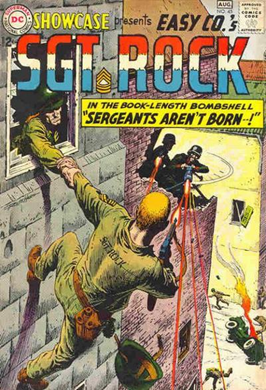
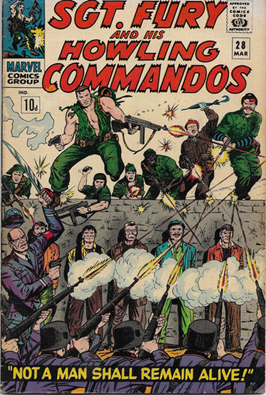
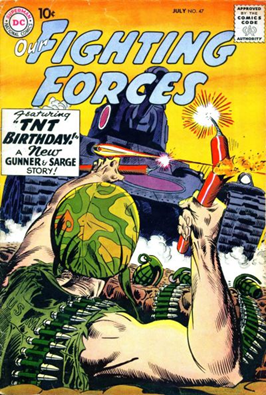
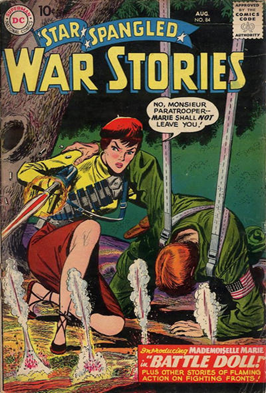
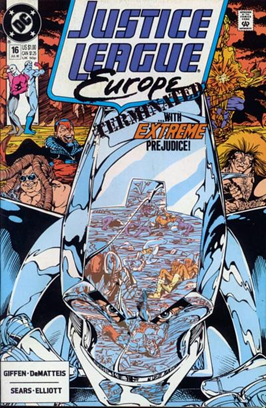
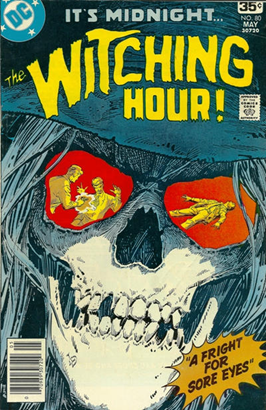
COMICS CAN BE AWESOME (2 March 2026)

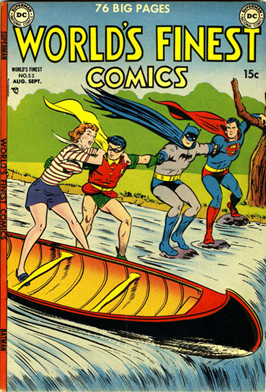
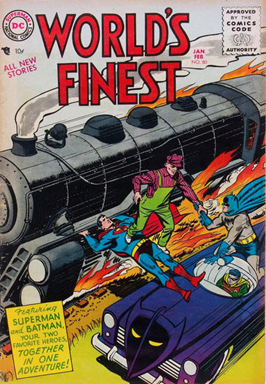
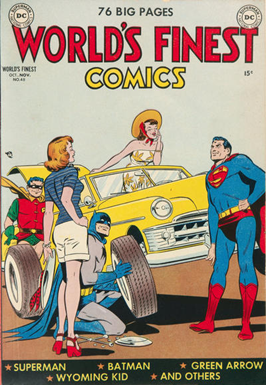
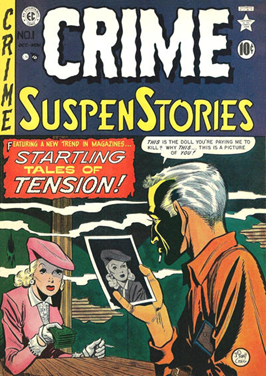
This week’s reminder that comics can be awesome is a nod to the messy preposterousness of imperialism… in the form of ridiculously busy Captain America covers.

Posted in GLIMPSES INTO THE PAST | Tagged , , , , , , , , , , , , , , , | Leave a comment

More snapshots from Batman’s and Gordon’s bickering bromance

Batman #251

Batman #312

The Batman’s Grave #6

Detective Comics #482

Batman/Superman: World’s Finest #32

Dark Patterns #7

Posted in GOTHAM INTERLUDES | Tagged , | Leave a comment

COMICS CAN BE AWESOME (23 February 2026)

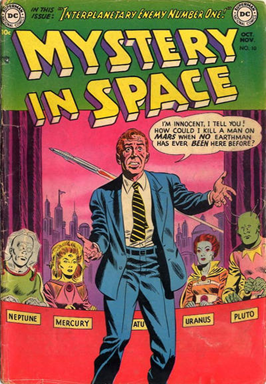
A reminder that the covers of Mystery in Space in the 1950s-60s can be awesome!

Posted in GLIMPSES INTO THE FUTURE | Tagged , , , , , , , , , | Leave a comment

COMICS CAN BE AWESOME (16 February 2026)

In this week’s reminder that comic book covers can be awesome, Batman gets devoured!

Posted in COVERS OF BATMAN COMICS | Tagged , , , , , , , | Leave a comment

Amazing crime films from around the world

I may not need to tell you that eminently quotable gangster flicks like The Godfather and Pulp Fiction are rightly acclaimed as peaks in crime cinema (hell, peaks in film history), as are Goodfellas and, in fact, most Scorsese pictures (many of which are awesomely channeled in Marty Supreme, a vigorous response to the recent wave of films about ambitious geniuses fulfilling the American dream… albeit in the offbeat guise of a ping pong sports comedy).

Still, it’s a shame how these works overshadow many other incredible approaches to the genre in movies from very different countries and eras. So, here is a post for those looking for further intense and intelligent explorations of crime on film:

BLACK DOG (2024)

The first half of Black Dog feels a like a badass Chinese neo-western (with a somewhat post-apocalyptic vibe), opening in the vast desert and then following a laconic ex-con as he returns to his decadent hometown, which has been abandoned by those seeking a better life in the big cities and is now being taken over by packs of wild dogs (it’s almost as if the desert itself is encroaching upon the town). The pace is slow, but there is definitely a cool thriller vibe here, with our lead striking a bond with the titular black dog while criminals come after him for revenge, threatening to shift the film from the world of Sergio Leone into John Wick territory. As the movie progresses, though, it actually becomes even more elliptical and damn moody, not least when Pink Floyd take over the soundtrack… Plus, while I’m not one to read every artistic product from authoritarian contexts as necessarily a comment on their regime, it’s hard to deny Black Dog’s critical and allegorical dimension, depicting an utterly desolated side of the People’s Republic of China that seems like a world away from the sort of triumphalist modernity projected by the 2008 Olympics (which linger the background), populated by people who have little relation to the authorities and for whom state plans feel as foreign and unpredictable as a divine intervention (or an earthquake). It’s a dog’s world.

HIGH AND LOW (1963)

Although adapting a hardboiled novel by Ed McBain about a wealthy industrialist who has to choose between his money and saving a kidnapped child, High and Low brilliantly transforms the source material in three ways. First and foremost, Akira Kurosawa turns it into an engrossing cinematic tour de force of fluid camera movements, ingenious mise-en-scene, and widescreen compositions, often packing the frame with several people, whether acting as a collective or as individuals dealing with their place in the grand scheme of things. Secondly, he turns it into a story about Japan’s modernizing, capitalist, male-dominated society, offering a tour of the seediest places of the city of Yokohama as the action moves from the titular high (the industrialist’s heavenly mansion at the top of the hill) to the low (the hellish, drug-infested neighborhoods at the bottom). Finally, Kurosawa subverts the novel’s celebration of individualism and capitalism (as per its rich, triumphant hero) by placing the main focus on inequality. I much prefer it to Spike Lee’s recent remake, which reverts to the novel’s reactionary ideology, no doubt with an autobiographical slant. (For my money, Kurosawa’s’s most direct successor in terms of themes and visuals – albeit with a very different tone – is Bong Joon Ho’s Parasite.)

DEN OF THIEVES (2018)

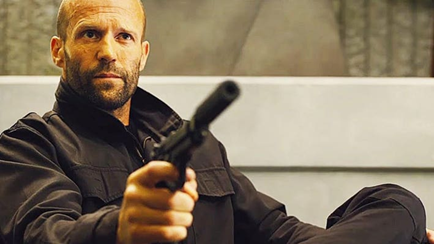
My first pick to represent the US may seem too mainstream, but I think this heist movie is actually quite underrated… Moving confidently between the perspectives of the cops and of the gang of thieves they’re chasing, it achieves that rare balance of storytelling where your loyalties oscillate back and forth as you watch, even as both sides include their share of flawed characters doing unlikable things (the fact that Gerard Butler convincingly plays such a fucked up LA sheriff helps further blur the lines between the two warrior camps). It’s very tempting to label Den of Thieves as a Trump-era remake of Michael Mann’s Heat, but that’s not the same as dismissing it: hell, I actually prefer it to Mann’s classic, not least because this one oozes a more genuine post-working-class sensibility that dignifies without necessarily glorifying all these violent, muscled, tattooed, cigarette-smoking men working their way around the system in Los Angeles’ industrial-looking landscape. The testosterone dripping from every single frame somehow pushes the film beyond a mere celebration of male comradery and/or toxic masculinity, delivering something that feels knowing without being ironic, clever without sounding pretentious, and fucking tense to boot. No wonder Den of Thieves even won over one of my favorite filmmakers, Christian Petzold.  (The sequel, Pantera, has more of a suave James Bondian veneer as it follows the surviving cast members to Europe, further developing the homosocial subtext while now doing a version of Ronin.)

FEAR (1964)

I also highly recommend this police procedural from 1960s’ Czechoslovakia, which may come across as surprising (at least for those of us who grew up in the West), not despite, but precisely *because* of its familiar surface and structure… Indeed, while young experimental auteurs in the then-communist state were making the most out of a period of political and creative liberalization (crushed later in the decade), challenging conventions through the so-called Czech New Wave, there were also a bunch of filmmakers churning out damn solid genre films, particularly the gritty crime series featuring detectives Major Kalaš and Lieutenant Varga. In their first movie, Fear, they investigate a hit-and-run murder which may be linked to a pornography ring or perhaps to something much more sinister. Beautifully shot, with noirish lighting, understanded performances, smart characters, sharp dialogue, and engrossing intrigue, the result is tighter than most current cop shows, yet it also works as a precursor of C.S.I.’s fascination with forensic techniques. 

THE CRIMINAL CODE (1931)

Another one from the USA, but this one made almost a whole century ago… And yet, because it was directed by the great Howard Hawks, the pace of the acting, hardboiled dialogue, and gallows humor can outmatch many recent crime dramas, while the themes of masculinity, loyalty, and a heartless system remain just as relevant. Basically, The Criminal Code builds into one hell of a prison yarn where the title does double duty, pitting the criminal code of the law against the code of the criminals themselves, both of them based on ruthless punishment. Hawks crafted so many all-time classics that this one doesn’t usually rank in his top 10, but it’s an absolutely terrific piece of filmmaking, including one of the most powerful killing sequences in the history of cinema.

IT WAS JUST AN ACCIDENT (2025)

Finally, we get a nightmarish tale from Iran with a classic hook: a guy has a minor car accident, hitting an animal, and his life spirals completely out of control from there as one thing leads to another… I’m keeping things vague, because part of the power of It Was Just an Accident is watching each one of those things leading into the other, introducing new characters that further complicate the situation, especially as the tone also keeps shifting, from intimate drama to Coen-esque black comedy, from suspenseful psychological horror to full-blown political polemic. I would say it’s hard to believe what writer-director Jafar Panahi can get away with, but of course he didn’t quite get away with it, having been sentenced to prison (again). More than a martyr, though, Panahi is one of the greatest living directors, with a beautiful command of mise-en-scene, and it’s fascinating how easily he was able to tweak his typical car-based family dynamics into such a dark masterpiece.

Posted in HARDBOILED CRIME | Tagged , , | Leave a comment

COMICS CAN BE AWESOME (9 February 2026)

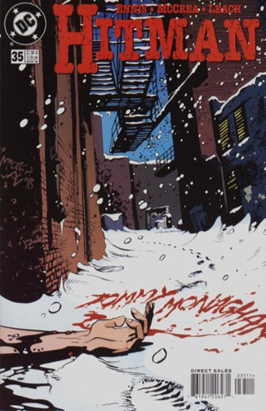
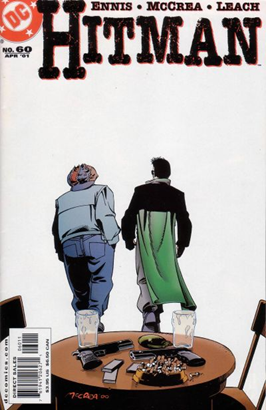
A reminder that covers can be awesome for fans of comic book brutality:
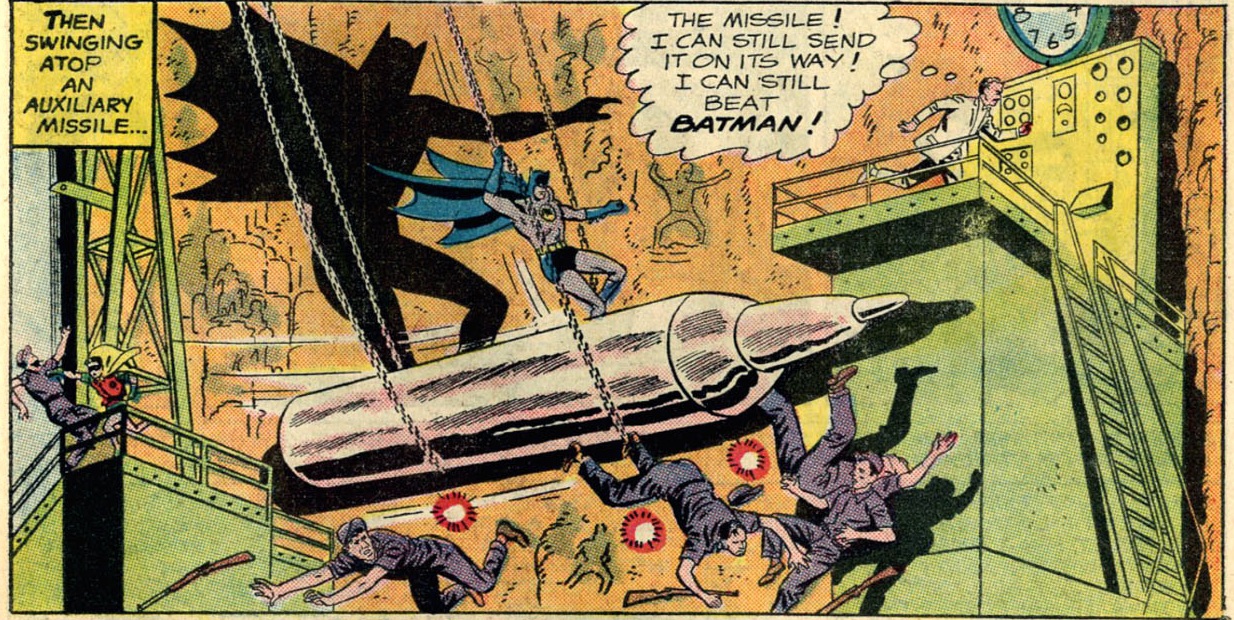
Posted in AWESOME COVERS | Tagged , , , , , , , , , , , | Leave a comment

2025’s books of the year – part 5

As the countdown of my favorite graphic novels of 2025 reaches the top five, we are now in that stage where almost every pick had a fair shot at being Gotham Calling’s book of the year.

I probably spent more time reading non-comic books last year (finishing on a high note with Clown Town, the latest hilarious installment of Mick Herron’s Slough House spy series), but these were the comics that most reinvigorated my passion for this medium:

5. THE POWER FANTASY: THE SUPERPOWERS

Back in the mid-1980s, and again in the early 2000s, it appeared as if the future – or at least a significant part of the future – of superhero comics lay in stories about superpowered beings with more ambiguous (or even complex) morality compared to the genre’s usual standards, more adult characterization, ambitious stories, and a provocative engagement with geopolitics that was both more literal (i.e. speculating about real-world implications) and allegorical (i.e. with characters’ powers standing in for growing technological and military might, especially nuclear weapons). There are too many examples to list, but you can find quintessential takes on this in the bibliographies of Alan Moore (Watchmen, Miracleman), Rick Veitch (The One, Maximortal), J. Michael Straczynski (Rising Stars, Supreme Power), Joe Casey (Automatic Kafka, Wildcats version 3.0), and Mark Millar (The Authority, The Ultimates). This approach never fully went away, although it seemed to lose steam after the abovementioned creative peaks, perhaps because the genre proved more limited and inflexible than it first promised… or simply because the sheer mind-blowing freshness of breaking away from the previous naiveté soon gave way to a new standard of familiar, if cynical, narratives.

While it seems impossible to recapture the gesture’s initial shock and originality, you can still find the occasional interesting stab at this subgenre. It’s certainly the case with the version of the Valiant Universe that has been developing since 2012, especially some of the runs on Bloodshot, Archer & Armstrong, Ninjak, and Imperium. That’s why I was so excited about the line’s 2023 relaunch, as it followed directly from the work in the previous decade and it even brought back cool writers like Jody Houser, Peter Milligan, and Fred Van Lente (who injected his signature brand of smart fun into the Assassin Nation mini-series), although the drop in quality in terms of artwork was pretty drastic. (That said, one of my favorites in the new batch, Ninjak vs Roku, was penned by a writer I didn’t know: AJ Ampadu). Sadly, the relaunch emulated the vices of the big publishers’ events, getting too bogged down in continuity and rushing to fit too many pieces together rather than fleshing out scenes and characters. And sure, outside Valiant, there were other options to satisfy the craving for this sort of approach to superheroes in 2025, like Bood Squad Seven and the conclusion of Jupiter’s Legacy, but those still fell short of the heights reached by Casey and Millar in the past…

Fortunately, we also got The Power Fantasy. If you’ve read any of the books I’ve referenced, you’ll agree this series isn’t exactly inventing the wheel here. What Kieron Gillen does, however, is to write a particularly clever spin on the concept in the form of a supernatural political thriller, focusing in particular on the themes of gods-versus-mortals, balance of power, security dilemmas, and the (sadly recognizable) feeling of being, not just on the brink of war, but on the brink of the apocalypse. In the alt-reality of The Power Fantasy, there are six godlike people on Earth and the threat of devastation if they fight feels so massive and real (in contrast to the DC or Marvel universes, where you know things won’t stray too far from the status quo, at least not for long) that the tension becomes tight as hell as we watch them conspire, spy, negotiate, and generally try to outsmart each other. Besides the Brobdingnagian stakes, Gillen also keeps readers on the edge through a puzzle-like chronology that gradually fills in the missing pieces by jumping back and forth, but the best bits still stem from his knack for zingy, hyperbolic lines (‘It’s time to militarize magic.’).

The storytelling is quite dialogue-heavy, which I don’t mind, as it’s such witty and engrossing dialogue, but Caspar Wijngaard does a phenomenal job of keeping the visuals moody and inventive, effectively illustrating the cast’s various gifts, from telepathy to telekinesis, which is no small feat. In fact, given Gillen’s general tendency for cerebral, conceptual, big-picture plotting, Wijngaard’s mise-en-scene is vital in terms of landing the dramatic punch of several scenes.

The first collection, titled The Superpowers, hit the ground running in terms of setting up what is bound to be an instant classic of this subgenre. The second volume, Mutually Reassuring Destruction, also came out in 2025 and it continued to swing for the fences on every page.

4. ABSOLUTE MARTIAN MANHUNTER: MARTIAN VISION

DC’s Absolute line has been getting a lot of critical praise in my circles, much of it deserved. While Absolute Wonder Woman and Absolute Batman are basically variations on the main line, offering little more than a particularly pumped-up, visually striking take on conventional superhero action, Absolute Martian Manhunter actually uses the freedom of radically reinventing DC’s characters to do something very different. Writer Deniz Camp loosely repurposes the notion of a shapeshifting telepathic alien into a tale of psychological horror about an otherworldly consciousness that allows John Jones, an agent at the FBI’s Stochastic Terrorism Task Force, to get glimpses of people’s minds during his investigations.

I won’t dig deep into the story or concept here, because an important part of the ride in this first volume is trying to gradually figure out – along with John Jones himself – what the hell is going on. Suffice to say that, more than the bigger narrative (which, like so many works in 2025, tackles an encroaching sense of despair, quite understandably), the comic’s most inspired passages are the little observations and turns of phrase used to describe the feelings and memories glanced at by the protagonist. What elevates this even more is the way such emotions are then often translated into trippy visuals by artist Javier Rodríguez and letterer Hassan Otsmane-Elhaou. That complementarity may sound like what all good comics do anyway, but the sensorial confusion is really central to Martian Vision and there is nothing out there today that reads quite like this book. It pushes synesthesia to new levels, layering each color choice with stark power and symbolism… along with making every single page aesthetically pleasing. By which I mean: absolutely astonishing. 

Those, like me, who grew up on Vertigo and still look back fondly on that wave of early ‘90s comics are also bound to recognize in Absolute Martian Manhunter a worthy successor to the sort of stuff done at the time by the likes of Peter Milligan and Duncan Fegredo, provocatively reimagining DC icons through the lens of heady, mature horror. I don’t know how old Deniz Camp is, but that line’s influence is pretty clear in the work of a bunch of now-middle-aged writers who have been recovering this specific sensibility (like Ram V, James Tynion IV, and even Tom King). At their best, they capture not only the pretentiousness and self-seriousness of early Vertigo, but also an attitude of daring experimentation and of challenging (and trusting) readers’ intelligence.

3. DROME

Speaking of daring experimentation…

Take everything I wrote about the artwork in Absolute Martian Manhunter and multiply it by a million. With Drome, Jesse Lonergan delivered yet another veritable masterclass in how to make the most out of comic-book layouts, panel grids, character designs, and psychedelic colors, carefully calibrated to stimulate pace and meaning… and, above all, quasi-wordless action, both in the sense of story progression with inexorable forward momentum and in the sense of glorious ultra-violence and adrenaline-pumping mayhem aimed straight at the pleasure centers of those who still consider Jack Kirby the King (once again, a very blatant source of inspiration), not to mention fans of manga and the like.

There isn’t a single page in this whole graphic novel that is not incredible, in one way or another:

What about the story, though? Or is Jesse Lonergan’s craft only in the service of craft itself? Is the appeal mainly to watch a brilliant craftsman at work as this 300-plus page saga unfolds?

Well, Drome is a fable-like action-packed cosmic epic combining fantasy, intrigue, and romance – and a damn fine one at that, earning its fair share of emotional punches and intriguing ideas along the way. Still, I’d say the main impact comes from the way Lonergan weaves in contrasting scales on multiple levels: physical, temporal, personal, divine… His signature mix of claustrophobic panels and sudden splashes bursting with energy then become more than a virtuoso act. The spectacular visuals are a core part of the fabric of what makes this such a forceful yarn from start to finish.

2. THE DEPARTMENT OF TRUTH: WHAT YOUR COUNTRY CAN DO FOR YOU

A mind-bending sci-fi/horror/conspiracy thriller in a world where conspiracy theories can literally become reality if enough people believe in them, The Department of Truth is my favorite ongoing series, so, after a frustrating hiatus, I was ecstatic about getting two new collections in 2025. The first one, published early in the year, was titled What Your Country Can Do For You and, as you may guess from the reference (and from the book cover), it deals with the assassination of JFK. That volume not only ingeniously works this historical episode into the intricate overarching plot, but it also uses it to meditate on the evolution of the USA’s popular imagination, making this a read that often rhymed with Hellblazer: Dead in America.

This is the fifth paperback in the series and I wouldn’t recommend it as a starting point (unless you are specifically interested in the mythology of the early 1960s), but I assure you it’s worth getting on board just to make it this far, as it is highly gratifying to see the puzzle pieces finally come together. James Tynion IV expects you to be familiar not just with the rest of the saga, but also with the history and icons of Cold War America. Although keeping the story generally accessible (within the idiosyncratic storytelling), there are loads of neat references for those with a more encyclopedic knowledge: for example, because the Department of Truth was originally run by Frank Capra, the early tales are named after his movies.

Aesthetically, it’s one of the most stunning volumes in a series that always looks like nothing else out there anyway… The first three issues/chapters are illustrated by Martin Simmonds in the series’ ‘regular’ look of painted, splattered, often impressionistic images with remarkably disparate levels of realism, occasionally slipping into pure symbolism via collage-looking splashes (which crucially help keep things visually engaging even as Tynion leans on dialogue-heavy scenes that could’ve risked turning into endless talking head panels). The middle section has contributions from guest artists who have provided flashbacks in previous installments and who have quite different styles (from Simmonds and from each other), like Elsa Charretier, Tyler Boss, John J. Pearson, and Jorge Fornes, colored – also with very distinct tones – by Jordie Bellaire.

This inconsistency, if you can call it that, may have been brought about by Simmonds’ working rhythm or by editor Steve Foxe’s desire to keep adjusting the visuals to each tale’s sensibility (like The Sandman used to do), but the fact is that it actually works thematically, since this is a book about alternate, constantly mutating realities, so it conveys how different the world can feel as you change perspective. Letterer Aditya Bidikar enhances this strategy by also varying radically between odd speech bubbles with misaligned borders (in the ‘main’ story), typeset letters on torn papers (Capra’s recollections), handwritten notes (Lee Harvey Oswald’s narration), a more classic tight format (in some of the flashbacks), and a particular kind for the dialogue of the mysterious Woman in Red.

And then there are the two final issues, about Marilyn Monroe, phenomenally rendered by Alison Sampson in a suitably dreamy fashion… or, rather, fashions, as Sampson’s approach shifts every few pages while drawing on pop art (an irresistible choice when dealing with Monroe, I suppose), infographics, and truly inventive layouts that nail the overall sense of loose reality:
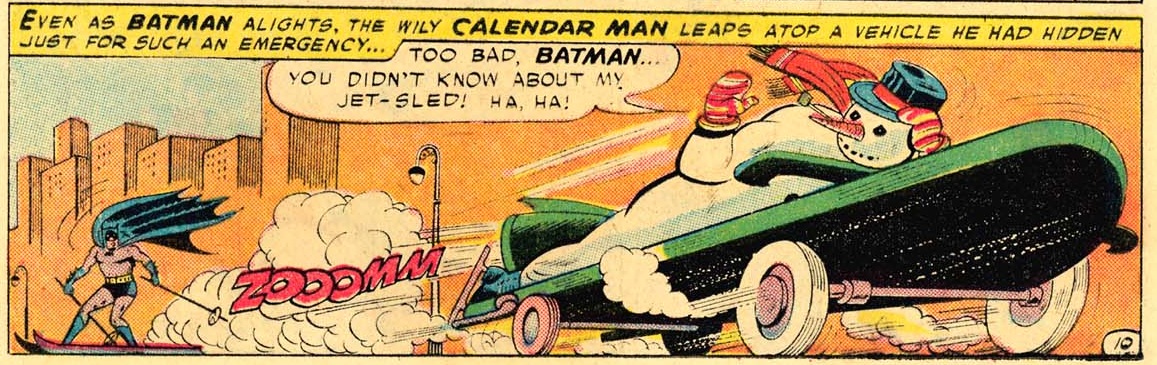
As far as I’m concerned, The Department of Truth deserves a place in comics’ pantheon alongside masterpieces of the medium like The Invisibles and The Sandman (both of which share many of its themes). This is another memorable volume, further strengthened by a curious essay on Bigfoot in the backmatter (an excerpt from the deluxe hardcover The Department of Truth: Wild Fictions, a spin-off that contains nifty ancillary material, such as the departments’ reports about urban legends and other myths brought to life). The only reason the book isn’t ranked even higher on this list is because, regardless of its original approach, JFK conspiracies are veeeery well-trodden ground (in that sense, Alisa Kwitney’s sci-fi memoir HOWL was a more stimulating comic about this era).
The power and history of collective imagination is a fascinating topic, which comics have explored in a myriad of ways (most notably in League of Extraordinary Gentlemen). Yet, ultimately, these flashbacks’ musings lack the same sense of urgency as the stories set in the present, where the feeling of unhinged reality feels as topical as ever in an age of widespread online rumors and overwhelming AI slop.

Then again, the sixth volume, Twilight’s Last Gleaming, which fully shifts back to the 21st century, is relatively light on action and ideas compared to this one.

1. ASSORTED CRISIS EVENTS: VOL. 1

A different take on similar subjects. Reality is breaking down, merging timelines and dimensions out of joint into chronological and other kinds of chaos, so, as the back cover of the first volume of Assorted Crisis Events puts it, ‘mingling in the red light district you can find actual cavemen, medieval knights, and cyborg soldiers on leave from World War IV.’ Yes, as the title suggests, this is basically Crisis on Infinite Earths (or a million other Crisis-like events), but the beauty of it is that we get an anthology of stories focusing on the street-level perspective of ordinary people bafflingly and helplessly caught in the maelstrom, in the spirit of the wonderful Astro City tale ‘The Nearness of You.’

As a sucker for fresh revisionist takes on genre fiction, I was already on board as long as the series had some nice art and fun writing, but boy did it go above and beyond this… Like Kurt Busiek in Astro City, Deniz Camp not only nails the human side of the fantastic, recontextualizing familiar feelings, but also manages to imbue the whole thing with a deeper meaning. Between this and Absolute Martian Manhunter, Camp proves himself a master at merging genre and intimate writing, each side smoothly informing the other.

Assorted Crisis Events was certainly one of the best books in terms of capturing the 2025 zeitgeist: not just a sense that the world (at least as we know it) was ending, but a sense that there were all these various apocalypses taking place at the same time. AI and tech oligarchs taking over, the rule of law falling apart, impending nuclear war, concentration camps, climate crisis, genocide, paramilitary militias, political assassinations, collapse of vaccination, the rise of nationalist authoritarianism in multiple countries, the list goes on. Watching the news on a daily basis often felt like this:

Assorted Crisis Events falls into that category of Twilight Zone-ish science fiction that is less interested in the minute mechanics of its story premise than in sci-fi’s ability to tackle emotions and social phenomena. Fortunately, Camp mostly pulls this off in a thoughtful, layered, imaginative way. Even the third tale, where a portal between parallel Earths offers an obvious parable about refugees and mass migration, doesn’t stick to easy preaching and satirical jabs (although there are some of those as well) and instead intelligently combines recognizable and original situations.

On art duties, Eric Zawadzki rises to the challenge of conveying chaos and disjointed time while ensuring readability – and runs with the opportunity to experiment with different approaches to layouts in every issue (or, in some cases, in almost every page). Jordie Bellaire’s coloring is majestic, as usual, but it’s especially apt at complementing Zawadzki’s ambitious designs by creating various depths of reality, giving the impression of overlapping timelines by foregrounding certain people and objects while lending others a more ‘unreal’ aura. Their combined flair for pacing and ingenious visual contrasts powerfully drive the fourth story, where a man’s life rushes at breathtaking speed, with him unable to grasp or appreciate each moment, which resonates particularly strongly for a middle-aged reader like me, looking back on the past and struggling to remember how the decades flew by (I especially like the sequence with a wall covered with posters of a film and its many sequels, which has become a recognizable sign of the passing of the years).

Hassan Otsmane-Elhaou’s strategic caption placements are also fundamental to the experience, guiding our eyes through unconventionally structured pages, especially in the closing issue/chapter, which often asks to be read in a circular, clockwise flow. This isn’t just a flashy choice: that final tale uses the notion of a time loop to explore trauma and the sensation of recurrently reliving (or being pulled back to) the same moment, unable to move on. It isn’t the most Moebius-looking comic of 2025 (that would be Precious Metal) but it comes damn close!

More than any other comic I’ve read in 2025, Assorted Crisis Events cleverly combined all the elements of the medium while compellingly putting them in the service poignant themes and awesome storytelling (not everyone agrees). The impact has stuck with me, having revisited the book a couple of times since the first read. I’m eagerly awaiting the second trade, not because of a cliffhanger, but because I trust this team and I’m genuinely curious to see what else they come up with inside this framework, hoping they’ll continue to push the boundaries of the relationship between comics and temporal perception. It’s not just killing time.

Posted in BOOKS OF THE YEAR | Tagged , , , , , , , , , , , , , , , , , , , , , , , , , | Leave a comment

COMICS CAN BE AWESOME (2 February 2026)

This week’s reminder that comics can be awesome is a tribute to the pulse-pounding covers of Tomahawk back in the 1960s-70s.

Posted in GLIMPSES INTO THE PAST | Tagged , , , , , , , , | Leave a comment

2025’s books of the year – part 4

When considering candidates for Gotham Calling’s book of the year, I tend to gravitate towards graphic novels that more or less stand on their own, providing such a satisfying read that I can recommend them as isolated objects. For instance, even though I think Love Everlasting is one of the most original and intriguing series in the last few years, offering an idiosyncratic dialogue with weird subgenres of the type of romance comics so in vogue in the 1950s and ‘60s, I’m not including its third collection, which came out in 2025. It’s not a bad book at all, but it basically continues to follow Joan Peterson from one romance to the next as she inevitably gets transported to another time/place/identity whenever she finds love (or when she gets shot by a mysterious cowboy), giving us a better peek into the background of Peterson’s odd situation yet ultimately opening way more questions than it answers. This remains a charming and engrossing series (thanks to Tom King’s way with words, Elsa Charretier’s very stylish artwork, Matt Hollingsworth’s atmospheric colors, and Clayton Cowles’ chameleonic letters) and I can’t wait to read more, but as a single book it didn’t match the amazing emotional punch of the family drama in the previous installment.

Still, I ended up being more flexible this time around, picking plenty of collections from ongoing series that neither kick off nor wrap up the full narrative, as long as they provided a relative sense of closure. So, while the third volume of Love Everlasting didn’t make the cut, others actually earned a spot in the top 10:

10. FANTASTIC FOUR: ALIENS, GHOSTS AND ALTERNATE EARTHS

Since 2022, Ryan North has been writing a run on Fantastic Four that deserves a place in the franchise’s pantheon, alongside the Jack Kirby-Stan Lee and the Mark Waid-Mike Wieringo stints. Not only does North draw on various sciences in highly imaginative and whimsical ways, but he also has a perfect handle in terms of characterization, nailing the cast’s voices, heroism, and wholesome, positive attitude. He also tends to make sure everyone contributes to the stories in significant ways, with their unique powers or insights that stem from their specific personalities, including the quartet’s extended family, like the Thing’s blind wife, Alicia Masters, and their adopted extraterrestrial children. What’s more, this run follows my favorite format: each arc takes up only one or two issues, providing a string of gratifying quasi-self-contained adventures that nevertheless build into a larger whole incrementally, through organic-seeming subplots and easy-to-grasp connections with the FF’s history and with other aspects of the Marvel Universe.

This fifth collection isn’t as perfect as the previous one (which delivered a bunch of instant classics), but it comes pretty close, with smart, occasionally moving tales featuring subatomic aliens, animal ghosts, divine intervention, and romance on an alternate dimension, often with the highest of stakes. Once again, the artists (Carlos Gómez, Ivan Fiorelli, Steven Cummings, Wayne Faucher) don’t have to reinvent the language of comics here, just to find a pleasing way to communicate North’s tight storytelling and awesome sci-fi concepts.

Still, Gómez, in conjunction with colorist Jesus Aburtov, creates some of the purest superhero visuals, in a classical yet splendidly slick style:

Besides Aliens, Ghosts and Alternate Earths, there was a sixth volume released in 2025, Our World Under Doom, more closely tied to the line-wide same-titled Marvel crossover about Doctor Doom taking over the world, also written by Ryan North. That one was more obviously topical, with the cast processing the new status quo in a variation of many people’s reaction to living under Donald Trump’s America and world order.

And yet, at a time when tech bros appear to be destroying the world (as poignantly mocked in the films Ex Machina and Mountainhead), I’d say this had already become one of the most political superhero series in our current moment, given Fantastic Four’s hopeful optimism about humanity and science, not to mention North’s vigorous emphasis on empathy, affection, and mutual reliance.

9. HELLBLAZER: DEAD IN AMERICA

John Constantine’s third appearance in this year’s list, after showing up in Zatanna: Bring Down the House and having a cameo in World’s Finest: IMPossible.

This one was a safe bet: Hellblazer has been one of my favorite series for decades and Si Spurrier has become one of my main go-to writers for quite a while, bringing an edgy smartness to everything he touches (even to a reboot of Hook Jaw!). Plus, his previous run on the series – with the same dream team of artist Aaron Campbell, colorist Jordie Bellaire, and letterer Aditya Bidikar – was nothing short of phenomenal. When that run (collected in Marks of Woe and The Best Version of You) got cancelled, Spurrier filed off the serial numbers and came up with his own ersatz-Hellblazer book, Damn Them All, and either that, fan outcry, or paperback sales must’ve shook DC’s editors into reason, as they let the original team reunite for another stab at the mischievous English working-class wizard.

Picking up shortly after the previous volume, Dead in America finds Constantine, his mute son Noah, and his Glaswegian buddy Natalie escaping to the United States to hide from the mess they made in the UK. The result is basically a riff on Swamp Thing’s groundbreaking arc ‘American Gothic’ (which introduced Constantine, back in the day), with a road trip through the US serving as a springboard for a British writer to examine key social issues across the Atlantic, turning migration hysteria, incells, and other hot topics into fodder for supernatural horror. The critical point of view isn’t necessarily original per se, or always subtle (one issue revolves around a very literal comparison between Hell and the USA), but it’s often worked into clever storytelling, powerful imagery, and quite a bit of dark humor.

Except for a couple of issues (including one that feels almost like an old-school anthology, with short stories by different artists), the visuals are provided by Campbell and Bellaire, who once again make this a comic of breathtaking beauty despite its eerie grotesqueries (and despite Bellaire – or Bidikar – pushing symbolism a bit too far through some red-white-and-blue word ballons). The layouts are ingeniously unsettling as well, like in this sequence which merges panels with a phone screen:

The reason Dead in America doesn’t rank even higher on the list has to do with how closely linked it is with The Sandman and with Alan Moore’s and Rick Veitch’s runs on Swamp Thing. I’m not talking about mere allusions here – the overarching plot is a direct sequel to the events of the classic first issues of The Sandman (not least #3, ‘Dream a Little Dream of Me,’ where Morpheus recovered a pouch of magical dream sand from John Constantine) and the payoff ties back to that series’ ending. Morpheus’ successor as Lord of Dreams repeatedly shows up and characters keep referencing events from 1980s’ comics, providing enough information for new readers to follow the story while pushing older fans’ nostalgia buttons. Even though Constantine at one point explicitly opposes becoming part of a metafictional tale (which is itself amusingly metafictional), he soon finds himself in Cambridge Mansion, from ‘Ghost Dance’ (Swamp Thing #45), suitably accompanied by riffs on the art and narration from that 40-year-old issue.

I don’t necessarily mind connections and callbacks to older works. Extended, intricate continuity can supply its own kind of pleasure and I understand the temptation to go back to those particular books, which were foundational both for Constantine’s corner of the DC/Vertigo Universe and for the entire genre of sophisticated horror comics that Spurrier is building on. Hell, for my money, those Swamp Thing issues, combined with Hellblazer and The Sandman, form a mega-epic with a strong claim to be considered the peak of the entire medium (even if The Sandman #17,‘Calliope,’ has turned out to be depressingly autobiographical). Still, the gesture feels a bit obtrusive here, shifting too much of the focus away from the topical themes that are ostensibly at the core of Dead in America while needlessly reminding us of how fresh these characters and stories felt when we read them the first time around.

The back matter indicates this project was a tribute to the whole Vertigo epic. As a wrap-up, it doesn’t have the grace and depth of Mike Carey’s Lucifer, but what Spurrier flawlessly pulls off is a succession of cunning schemes and manipulative twists worthy of the best Hellblazer narratives. I suppose that is the greatest tribute of all.

8. CRIMINAL: THE KNIVES

Ed Brubaker, Sean, and Jacob Phillips continue to build their case for Criminal as one of the all-time greatest crime comics (hell, one of the greatest comic book series, period). Like previous installments, the graphic novel The Knives can be easily enjoyed by newcomers looking for a standalone neo-noir yarn, as each volume is meant to work independently or out-of-order. Yet fans will get the special treat of revisiting familiar characters later in life, with the timeline reaching the 2020s. In particular, we get to see cartoonist Jacob Kurtz trying to make it in Hollywood and the young Angie Watson continue to make poor life decisions (she has now become a cat burglar), their storylines eventually intersecting with typically brutal consequences.

If you’re into Criminal already (or into Brubaker in general), you can guess that the Kurtz subplot ties into the broader thematic gesture of both delivering cool crime fiction (complete with kidnapping, capers, gangsters) and incorporating a reflection about how crime fiction is produced (in this case, zooming in on peak TV). The beginning is a little bit rough, with some lecturing about Hollywood coming across as forced and condescending (it’s hard to swallow that a 21st-century writer needs to be told what ‘intellectual property’ means), but the book soon moves into more comfortable territory, offering amusing insights about work in the entertainment industry…

Along with the intricate plotting and moody artwork, Criminal’s major strength has always been its sensitive, heartfelt characterization. Somehow, Ed Brubaker has made this a very personal vehicle for his anxieties and obsessions, as he once again spells out in the afterword and mirrors in the text itself, via Kurtz (including the memorable line: ‘He was constantly amazed at how much of himself he could put into a comic about a private detective (who was also a beaver).’). Even if you don’t care about Brubaker himself, it’s to his credit that this approach truly pays off in terms of creating a fleshed-out cast and dramatic beats a reader can seriously care about, so the result tends to hit harder and resonate longer than the usual genre thrills.

7. THE SPAWN OF VENUS AND OTHER STORIES ILLUSTRATED BY WALLACE WOOD

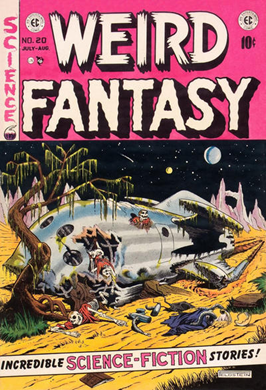
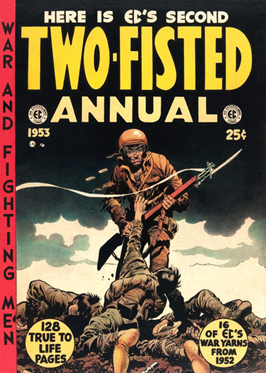
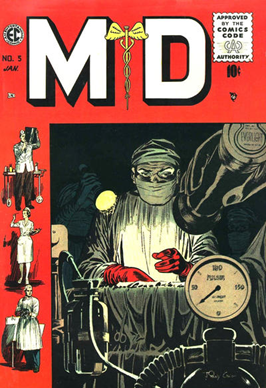
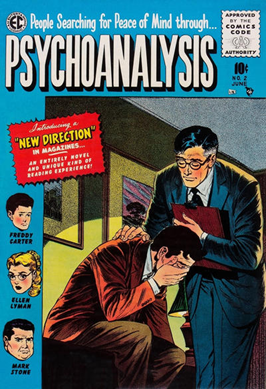
Along with the Lost Marvels line, Fantagraphics continues to put out terrific collections of 1950s’ EC comics and I continue to buy them. Reprinted in black & white to better showcase the impressive catalogue of talented artists, accompanied by insightful essays, these books are a real treat for any fan of the medium – not only for those interested in learning about seminal works that influence the evolution of various comic-book genres, but also for those who just want to read a bunch nice-looking and highly entertaining short stories.

The Spawn of Venus, the second volume devoted to sci-fi tales illustrated by Wally Wood, is somehow even better than the first one (Spawn of Mars). As usual, most stories were plotted by Bill Gaines and Al Feldstein – often by reworking ideas they stole from pulp magazines – and engage with core motifs of this era of science fiction, like discrimination, space exploration, radioactive mutation, and the looming threat of nuclear war. ‘Home to Stay’ famously blended two (very good) Ray Bradbury stories… and Bradbury, bless him, rather than merely ask them to pay copyright, actually acknowledged their amazing craft and endorsed the official adaptation of many of his other writings.

Sex and gender are also running themes, most notably in one of my all-time favorites, ‘The End,’ which starts off with a comet heading towards Earth and it becomes increasingly bonkers, wonderfully verging back and forth between speculative fiction, moving pathos, and cheeky comedy (sometimes all in the same page). This thematic recurrence means that the book not only effectively mobilizes Wood’s ability to draw futuristic technology, but it also makes the most out of his knack for expertly rendering gorgeous women.

Wally Wood was such an appealing draftsman that Al Feldstein even wrote an entire piece just around specific images Wood wanted to draw (‘My World’), although, to Feldstein’s credit, his purple prose can be as enjoyable as the art itself (‘It is the moment when the rocket ship breaks free of Earth’s gravity and streaks through the void in free fall… when its crewmen are suddenly weightless and float like children’s balloons at the circus…’). The book finishes with a tribute to that story in the form of photos of a diorama based on its final panel, meticulously crafted by Norm Watson. 

It was interesting to read this in the same year as the Towers of Shadows collection, where Wood’s tales (drawn almost twenty years later) look comparably minimalistic. At this stage, however, he seemed to try to fill each image with as many details as possible within his tight schedules. As Thommy Burns and Jon Gothold put it in their opening essay, the ‘jewel-like artwork feels less like a typical comic book story and more like a beautiful Fabergé egg.’ In lesser hands, such an aesthetic choice could’ve harmed the storytelling by cluttering panels that are often already packed with text, but here it works magnificently, bringing fantastic worlds to life. Just look at how the detailed backgrounds help set up the intriguing beginning of ‘The Children:’

I’ll just highlight a few standout tales. ‘EC Confidential’ is a classic of metafiction, with a publisher confronting Gaines and Feldstein with the fact that their comics seemed to have predicted real-world events (cue in a bunch of cameos by the EC staff). ‘The Spawn of Venus,’ never actually published by EC (it was part of an aborted 3D series), is a remake of a story previously collected in the (also very nifty) volume Child of Tomorrow and other stories, giving us an opportunity to compare how Wood and Feldstein approach the same material in quite distinctive ways.

‘You, Rocket’ is a superbly written (by Jack Oleck) and stunningly drawn take on posthumanism, which was truncated by the censors of the Comics Code Authority at the time and is now restored to its original vision for the first time in 70 years (as recounted in a fascinating piece by Grant Geissman). In fact, one of the missing panels was filled in by Al Feldstein in 2013, a year before he died, so, as the introduction aptly puts it, the man ‘who wrote so many stories about justice served beyond the grave, did exactly that from beyond his own grave, striking a final, defiant blow against censorship.’

Old-school comic fans should also appreciate the essays by Howard Chaykin and Larry Hama recalling Wood’s impact on their work.

6.THE NICE HOUSE BY THE SEA: VOL.1

Despite being labelled as ‘volume one,’ The Nice House by the Sea is a very direct continuation of The Nice House on the Lake, one of the coolest horror series of the last few years, about a group of millennials stuck in a weird idyllic mansion while the world ends. Following the cliffhanger from the last book, this one builds up to a clash with another mansion of survivors and, while it lacks the eerie impact of the previous comics now that we have a better clue of what the hell is going on, there are plenty of intriguing ideas to explore.

The characters from the new house aren’t as likable and well-developed as the ones we met before – and, honestly, I can’t tell if that’s because James Tynion IV’s script is a bit more rushed or if it’s actually a clever intentional move, stacking up the deck and getting us to root for the ones we care about the most. I give Tynion enough credit, especially as he continues to flesh out the previous group (even though they seem obsessed with their personal relationships growing up, as if there isn’t much else in life that defines them, despite their professional codenames).

Anyway, The Nice House continues to be a damn great series. A big reason for its haunting power is Álvaro Martínez Bueno’s artwork and Jordie Bellaire’s colors, in addition to the lettering and design work by Andworld Design. It’s one of those comics where every single page – hell, every single panel – seems to have been meticulously conceived and thought through to create just the perfect atmosphere for that specific scene… and yet, the book looks so gorgeous that I find myself flipping through it over and over again and just falling in love with a different visual choice every time.

Posted in BOOKS OF THE YEAR | Tagged , , , , , , , , , , , , , , , , , , , , , , , , , , , , | Leave a comment

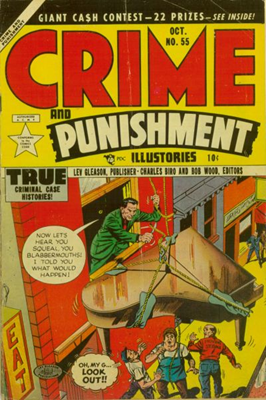
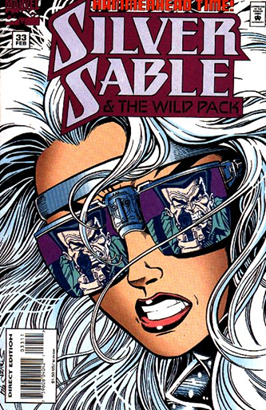
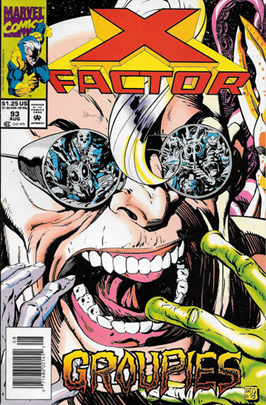
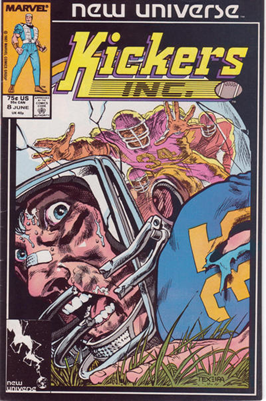
COMICS CAN BE AWESOME (26 January 2026)

Scott Adams is dead, yet neo-fascism is alive. And here is another reminder that comic book covers can be awesome… and eerie:

Posted in ART OF HORROR COMICS | Tagged , , , , , , , , , , , | Leave a comment